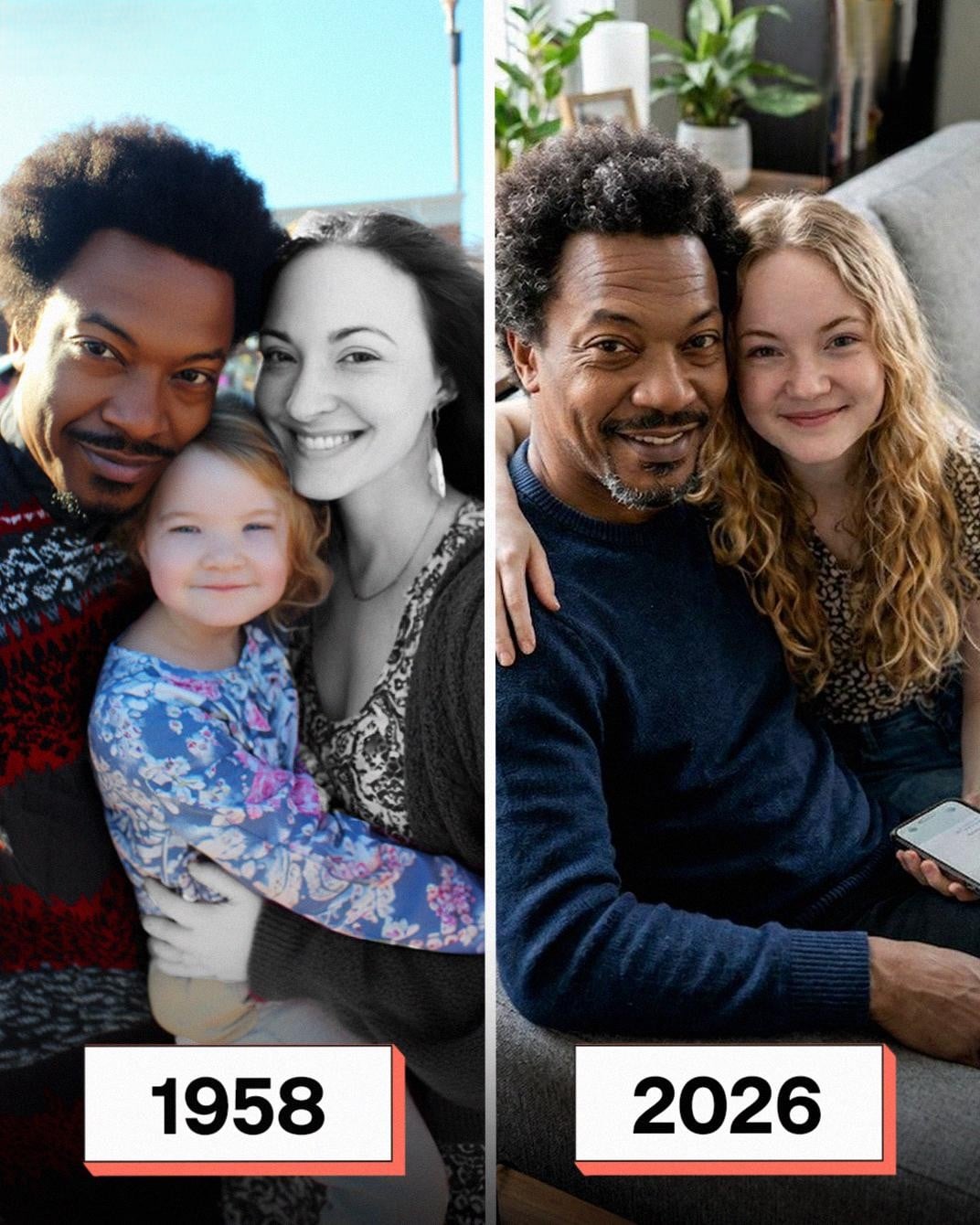
The first Thanksgiving Grace called me “Mr. Carter,” she was six years old and furious at me because I burned the dinner rolls.
Not slightly burned.
Destroyed.
Black as charcoal.
Smoke filled the kitchen while I waved a dish towel around like I was fighting a forest fire. Laura laughed so hard she nearly dropped the gravy bowl, and little Grace stood in the doorway with both hands on her tiny hips.
“You killed the bread.”
“I made a mistake,” I said seriously.
“You made a tragedy.”
Laura kissed my cheek. “She gets dramatic when she’s hungry.”
That night the three of us ate takeout mashed potatoes on the living room floor while watching old holiday movies. Grace eventually crawled into my lap and fell asleep there with stuffing on her chin.
I remember looking at Laura over her tiny head.
And thinking:
This.
This is what home feels like.
Back then, I didn’t know how fragile happiness could be.
I didn’t know that love could grow roots so deep that losing it would feel like ripping the earth apart.
And I definitely didn’t know that one day, the little girl sleeping on my chest would look me dead in the eye and say words that would nearly break me.
“I’m leaving with my real dad.”
But that came later.
Long after laughter.
Long after promises.
Long after grief taught us both how cruel the world could become.
I met Laura in 2008 at a bookstore café downtown.
She wore oversized sweaters and always tucked pencils behind her ear like she was afraid inspiration might attack without warning.
Grace was four then.
Golden curls.
Big blue eyes.
A missing front tooth she proudly showed every stranger.
Her biological father had vanished before she was even born.
According to Laura, his name was Marcus Reed — a talented college basketball player who suddenly got drafted into a professional league overseas.
The moment she told him she was pregnant, he disappeared.
No calls.
No money.
No birthday cards.
Nothing.
“He said he wasn’t ready,” Laura once told me quietly while washing dishes.
The pain in her voice sounded old.
Like something that had scarred over badly.
“But Grace doesn’t need him,” she added quickly. “She’s enough.”
I dried my hands and looked toward the living room where Grace was coloring dinosaurs purple.
“No,” I said softly.
“She’s everything.”
Laura smiled at me then.
And that was the moment I fell completely in love with both of them.
Grace didn’t trust me at first.
Honestly, fair.
To her, I was just another grown man showing up in her life making promises adults usually broke.
But I kept showing up.
I attended dance recitals where she mostly stood frozen on stage picking her nose.
I learned how to braid hair from YouTube tutorials.
Badly.
One time I accidentally tied her curls into something resembling a fishing knot.
The school nurse asked if everything was okay at home.
Grace defended me immediately.
“He’s trying his best.”
I nearly cried in a Walgreens parking lot after hearing that.
Trying his best.
That became my religion.
Not perfection.
Presence.
I built her a treehouse in our backyard even though I had absolutely no construction experience. It leaned slightly to the left like it had opinions about politics.
Grace loved it anyway.
“It looks magical,” she whispered.
That’s the thing about children.
They see love where adults only see flaws.
Then Laura got sick.
Aggressive leukemia.
The kind doctors explain with careful voices and too much eye contact.
Everything changed overnight.
Hospital rooms replaced movie nights.
Chemotherapy replaced vacations.
Fear replaced certainty.
Grace was only eight.
Too young to understand why her mother suddenly looked smaller every week.
One night in the hospital, Laura asked me to step outside with her.
She was weak.
Pale.
Terrified.
But her eyes were still warm.
“Promise me something,” she whispered.
“Anything.”
“If something happens to me…”
I immediately shook my head.
“Laura—”
“Please.”
Tears burned behind her eyes.
“Promise me Grace never feels abandoned.”
That word hung between us.
Abandoned.
Marcus had abandoned them.
Life was abandoning her.
And somehow she was still thinking about Grace before herself.
I grabbed her trembling hand.
“I swear.”
Laura died three months later.
The morning after the funeral, Grace climbed into my bed carrying her stuffed rabbit.
“Are you going away too?”
There are questions children ask that split your soul open.
I pulled her against my chest.
“No,” I whispered.
“Never.”
And I meant it.
A year later, I officially adopted Grace.
Some people thought I was crazy.
“You’re still young,” my cousin warned me. “You could start over.”
I looked at Grace asleep in the backseat after soccer practice.
“I already started,” I replied.
And I never regretted it.
Not once.
Raising Grace became the greatest privilege of my life.
She grew into this bright, compassionate, stubborn force of nature.
At thirteen, she organized a fundraiser for homeless veterans after seeing one man sleeping outside a grocery store.
At fourteen, she rescued an injured pit bull and hid it in our garage for three days before I discovered it.
At fifteen, she told a boy at school:
“If you make fun of my dad again, I’ll ruin your social life.”
Apparently he believed her.
Smart kid.
We weren’t rich.
Not even close.
I repaired furniture in a cramped workshop behind our house while Grace worked part-time at a bookstore after school.
But we were happy.
And honestly?
I thought we’d already survived the worst life could throw at us.
I was wrong.
It started two weeks before Thanksgiving.
Grace came home quieter than usual.
No music blasting from her room.
No dramatic complaints about homework.
No stealing fries off my plate.
Just silence.
I found her sitting on the back porch staring at her phone.
“You okay?”
She forced a smile too quickly.
“Fine.”
Parenthood teaches you something important:
“Fine” is the most dangerous word in the English language.
Three nights later, I heard crying through her bedroom door.
Not loud crying.
The kind people do when they’re trying not to be heard.
I knocked softly.
“Grace?”
No answer.
I entered anyway.
She quickly wiped her eyes.
“What happened?”
“Nothing.”
I sat beside her.
“Talk to me.”
She hesitated.
Then finally whispered:
“He found me.”
Cold spread through my chest.
“Who?”
She swallowed hard.
“My biological father.”
For a moment, I genuinely couldn’t breathe.
Marcus Reed.
The ghost.
The coward.
The man who disappeared for sixteen years.
And now he was back.
Turns out Marcus had become famous.
Very famous.
After years overseas, he’d returned to America as a sports commentator and investor. He had endorsement deals, magazine interviews, luxury homes — the kind of life social media worships.
Grace showed me his Instagram.
Private jets.
Courtside seats.
Celebrity parties.
A polished life built on abandoned foundations.
“He says he’s sorry,” Grace murmured.
I kept my voice calm.
“What do you want?”
“I don’t know.”
And that was the truth.
Because sixteen-year-old girls are still children in so many ways.
Part of her was angry.
Part of her was curious.
Part of her wanted answers.
And another small part — the wounded child inside her — wanted to know why she wasn’t enough for him to stay.
That’s the cruelest thing abandonment does.
It teaches children to question their own worth.
At first Marcus played the role perfectly.
Flowers arrived.
Expensive gifts.
Designer shoes.
Concert tickets.
Grace resisted.
But slowly, curiosity pulled her closer.
Then the manipulation started.
Subtle at first.
“He says you kept me from him.”
I nearly laughed from disbelief.
“He vanished before you were born.”
“I know. I’m just telling you what he said.”
Then:
“He says I deserve more opportunities.”
Then:
“He says you turned me against him.”
Classic.
Blame everyone except yourself.
One night Grace finally exploded.
“Why didn’t you ever tell me more about him?!”
I stared at her in shock.
“Because there wasn’t much to tell.”
“You could’ve tried harder!”
The moment the words left her mouth, regret flooded her face.
But damage doesn’t wait for apologies.
I quietly stood.
“I think you should get some sleep.”
That night I sat alone in my workshop until sunrise staring at unfinished furniture.
Not angry.
Just heartbroken.
Because loving someone means accepting they can wound you without meaning to.
Thanksgiving morning arrived gray and cold.
The turkey roasted in the oven.
Football played quietly in the background.
Rain tapped softly against the windows.
Grace stood in the kitchen trembling.
“I’m leaving.”
I frowned.
“What?”
She burst into tears.
“Marcus says if I don’t move in with him, he’ll destroy you.”
Every muscle in my body went still.
“What are you talking about?”
She handed me her phone.
And suddenly everything made sense.
The threats.
The fear.
The distance.
Marcus had discovered my workshop business used reclaimed wood from suppliers who occasionally bent permit regulations.
Nothing criminal.
Nothing major.
But enough to create ugly investigations and bad publicity.
And Marcus intended to weaponize it.
The messages made me sick.
If you love him, you’ll come with me voluntarily.
Men like him always hold people back.
You deserve wealth, opportunities, status.
I can ruin his business overnight.
Grace looked shattered.
“He said he’d make your life hell.”
“And you believed sacrificing yourself would protect me?”
Fresh tears slid down her face.
“He’s powerful.”
I cupped her face gently.
“Look at me.”
She did.
“You are not a bargaining chip.”
“But—”
“No.”
For the first time in years, anger burned hot inside me.
Not rage.
Purpose.
Someone had threatened my daughter.
And I was done being polite.
I spent Thanksgiving gathering evidence while pretending everything was normal.
Screenshots.
Voicemails.
Emails.
Grace helped shakily beside me.
At one point she whispered:
“I’m sorry.”
I squeezed her hand.
“You have nothing to apologize for.”
By evening, we had enough proof to expose him publicly.
Extortion.
Manipulation.
Coercion.
Marcus thought fame made him untouchable.
Famous people often confuse applause with immunity.
Then he arrived.
Black SUV.
Expensive coat.
Movie-star confidence.
He walked toward our front porch smiling like he already owned the ending.
Grace froze beside me.
Marcus looked at her first.
“Ready to go?”
Then he looked at me.
“You must be Daniel.”
No handshake.
No gratitude.
Nothing.
Just arrogance.
I stepped aside calmly.
“Come in.”
He entered smugly.
Big mistake.
Because waiting inside were:
- my lawyer cousin,
- a journalist friend,
- and two investigators from the sports ethics committee.
Marcus stopped smiling immediately.
“What is this?”
I placed printed screenshots on the table one by one.
Threats.
Manipulation.
Blackmail.
His face drained of color.
“You set me up?”
“No,” I said quietly.
“You did that yourself.”
Grace stood trembling beside the staircase.
Marcus looked toward her desperately.
“Grace, sweetheart, tell them—”
“No.”
Her voice cracked but stayed strong.
“You don’t get to call me sweetheart.”
Silence swallowed the room.
“You scared me,” she whispered. “You tried to use me.”
Marcus looked genuinely panicked now.
“I was trying to help you!”
“No,” she said.
“You were trying to own me.”
That sentence hit harder than anything else.
Because it was true.
Men like Marcus don’t love people.
They collect them.
The fallout happened fast.
Sponsors dropped him within days.
Headlines exploded.
LEAGUE INVESTIGATES STAR COMMENTATOR FOR BLACKMAIL.
PRIVATE MESSAGES LEAKED.
PUBLIC IMAGE COLLAPSES.
Marcus called repeatedly.
Neither of us answered.
Eventually the noise faded.
As scandals always do.
But healing takes longer than headlines.
A week later, I found Grace sitting quietly in my workshop.
The smell of cedar filled the air.
She watched me sand down a rocking chair in silence.
Then finally asked:
“You ever regret adopting me?”
The question nearly destroyed me.
I set the wood aside immediately.
“Grace.”
Tears filled her eyes.
“I caused all this.”
I walked over and knelt in front of her.
“Listen carefully to me.”
She looked down.
“You are the best thing that ever happened to my life.”
She broke then.
Crying hard against my shoulder like she hadn’t since childhood.
“I’m sorry I almost left.”
I held her tightly.
“But you didn’t.”
And that was enough.
Years passed.
The wounds faded slowly.
Grace went to college for journalism.
She became fearless.
Sharp.
Compassionate.
The kind of woman who defended vulnerable people because she knew exactly how manipulation felt.
And every Sunday, no matter how busy life became, she still came home for dinner.
Still stole fries off my plate.
Still mocked my terrible cooking.
Some things survive everything.
On her wedding day, Grace stood in front of the mirror adjusting her dress with trembling fingers.
“You nervous?” I asked softly.
“A little.”
She turned toward me.
Then smiled sadly.
“You know… when I was younger, I used to think fathers were the people who made you.”
I swallowed hard.
“But now I think fathers are the people who stay.”
That almost broke me.
Outside, music drifted through the garden.
Guests laughed softly beneath white lights.
Grace reached for my hand.
“Ready to walk me down the aisle, Dad?”
Dad.
After all those years, it still healed something inside me every single time.
I smiled through tears.
“Always.”
And together, we walked forward.
Not because blood made us family.
But because love did.
Because staying did.
Because real fathers are not defined by biology, money, fame, or power.
They’re defined by presence.
By sacrifice.
By the quiet decision to love someone every day — especially when it’s hard.
And that is the moral of this story:
Anyone can create a child.
But the people who truly become parents are the ones who protect, nurture, forgive, and remain when leaving would be easier.
Blood may begin a story.
But love is what finishes it.