Ten years ago, I adopted my late girlfriend Laura’s little daughter, Grace.
Laura had gotten pregnant during a previous relationship, and when she told Grace’s biological father, he vanished. Gone. No calls. No support. No goodbye. Just disappeared like smoke in the wind.
I met Laura years later.
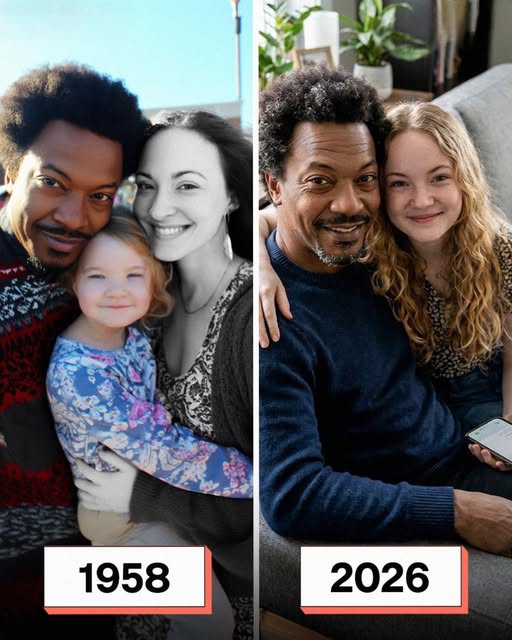
She was sunshine — warm, gentle, impossible not to lozve. The kind of woman who laughed with her whole soul and made ordinary mornings feel magical. She worked at a tiny bookstore café downtown where the smell of coffee mixed with old paperbacks. The first thing she ever said to me was:
“People who read the ending first can’t be trusted.”
I remember staring at her over a copy of To Kill a Mockingbird, pretending to be offended.
“Well,” I replied, “people who judge customers before they buy coffee can’t be trusted either.”
She laughed so hard she snorted.
That was it for me.
We fell in love slowly, then all at once.
Grace was five then — tiny freckles, messy curls, and giant curious eyes that looked like they had questions about everything in the universe.
The first time I met her, she hid behind Laura’s leg and whispered loudly:
“Mommy, is this the guy with the weird ears?”
Laura nearly died of embarrassment.
I touched my ears dramatically. “They’re not weird. They’re aerodynamic.”
Grace stared seriously. “Like Batman?”
“Exactly like Batman.”
That earned me my first smile.
And after that, somehow, I kept earning more.
I built her a crooked treehouse that leaned slightly left because I didn’t know what I was doing. I taught her to ride a bike by running behind her until I tripped over a sprinkler and tore my jeans open.
She laughed so hard she fell off the bike into the grass.
I learned to braid hair through online videos.
Poorly.
Very poorly.
Grace once went to school with a braid that looked like a loaf of bread fighting for survival.
Her teacher pulled me aside afterward and asked carefully:
“Everything okay at home?”
“No,” I admitted. “Hair is hard.”
Life felt full.
Simple.
Beautiful.
I planned to propose to Laura on Christmas Eve.
I already bought the ring.
I hid it inside an old cookie tin in my closet because I heard women never look there.
Turns out that was a lie.
Laura found it in two days.
She pretended not to know.
I pretended not to know she knew.
For weeks we both acted like undercover detectives in the world’s worst spy movie.
Then came the rain.
It was November.
Laura was driving home from work when a truck lost control on the highway.
People later called it “instant.”
I hate that word.
There is nothing instant about grief.
It stretches.
It echoes.
It crawls into every room and sits there breathing.
At the funeral, Grace held my hand so tightly my fingers went numb.
She was seven years old.
Seven.
Children that age should worry about cartoons and homework and whether monsters live under the bed.
Not whether the only parent they’ve ever known is buried underground.
That night, after everyone left, Grace climbed into my lap and asked the question that shattered me.
“Are you leaving too?”
I held her so tightly she squeaked.
“No,” I whispered. “Never.”
And I meant it.
A month later, I officially adopted her.
Some relatives objected quietly.
Others loudly.
“You’re still young,” one uncle told me. “You could start your own family someday.”
I looked at Grace coloring beside the Christmas tree.
“I already did.”
Years passed.
Not easily.
But beautifully.
I learned school lunches, parent-teacher meetings, bedtime fevers, science fairs, piano recitals, teenage mood swings, and the terrifying price of prom dresses.
Grace grew into someone extraordinary.
She inherited Laura’s kindness.
And her stubbornness.
God, the stubbornness.
At fourteen, she decided she wanted to rescue every stray animal in the city.
At one point our garage contained:
- three cats,
- a one-eyed dog,
- two injured pigeons,
- and a turtle named Ferdinand who hated me personally.
“You can’t save everything,” I told her once.
She looked at me calmly.
“Why not try?”
That sounded exactly like Laura.
When Grace turned sixteen, she asked if she could legally change her last name to mine.
I nearly crashed the car.
“You sure?” I asked quietly.
She rolled her eyes. “Dad, I’ve been sure since I was like eight.”
Dad.
She had called me Dad for years by then, but every single time it still healed something inside me.
Then one afternoon, everything changed.
Grace was seventeen.
I came home from work and found her sitting at the kitchen table, pale and silent.
“There’s someone asking about me,” she said.
My stomach tightened.
“Who?”
She slid a business card across the table.
Daniel Mercer.
Her biological father.
The ghost had returned.
Apparently, he had spent years drifting across states doing construction work, odd jobs, and occasionally disappearing entirely. But recently he had gotten sober. Or claimed to.
And now he wanted to “reconnect.”
Reconnect.
As if parenthood were a Wi-Fi signal.
Grace looked terrified.
“I don’t know what to do.”
I wanted to say:
Tell him to disappear forever.
But I didn’t.
Because loving someone means not making their choices for them.
So I said carefully, “You don’t owe anybody access to your life. But if you want to meet him, I’ll support you.”
She nodded slowly.
The meeting happened at a small diner.
I sat three booths away pretending to read a newspaper like some cliché detective from a bad movie.
Daniel looked older than I expected.
Tired.
He had nervous hands.
Grace sat across from him stiffly.
I watched him talk.
Watched her listen.
Watched years of absence hang between them like broken glass.
After twenty minutes Grace stood abruptly and walked outside.
I followed.
“Well?” I asked gently.
She looked confused.
“He cried.”
“That doesn’t change anything.”
“I know.”
A week later she asked to meet him again.
Then again.
And slowly, painfully, some sort of fragile relationship began.
I hated how much it bothered me.
Not because I feared losing her.
But because part of me feared she deserved better than me.
Blood has a strange power over people.
Even absent blood.
One night Grace found me sitting alone on the porch.
“You think I’m replacing you,” she said softly.
“No.”
She raised an eyebrow.
“That’s a lie.”
I sighed.
“Maybe a little.”
Grace sat beside me.
“You know what my first memory is?”
I shook my head.
“You kneeling in the snow trying to fix my mitten because I cried when it tore.”
I laughed faintly. “I remember that mitten. Purple.”
“You stayed up all night sewing it.”
“I was terrible at sewing.”
“It looked awful.”
“Thanks.”
She leaned her head on my shoulder.
“You’re my dad. He’s just somebody who arrived late.”
I nearly cried right there on the porch.
But life wasn’t done testing us yet.
Two months later, Daniel got diagnosed with heart failure.
Severe.
The doctors told him he needed surgery he couldn’t afford.
Grace was devastated despite everything.
And then came the impossible request.
“Can he stay with us for a while?”
Every instinct screamed no.
This man abandoned her.
Laura suffered because of him.
Grace cried because of him.
But I looked at my daughter and saw compassion winning over pain.
And I remembered something Laura once told me:
“The people who need kindness most usually deserve it least.”
So I agreed.
Living with Daniel was… complicated.
At first, we barely spoke.
He seemed ashamed all the time.
One night I found him staring at old photos in the living room.
“You were there for everything,” he said quietly.
I didn’t answer.
He swallowed hard.
“She drew pictures of you.”
Still silent.
“I used to tell myself she was better off without me.”
“You told yourself that because it was easier than admitting you were scared.”
That hit him hard.
A few weeks later, Daniel collapsed.
We rushed him to the hospital.
Grace cried in the waiting room for hours.
And while she slept against my shoulder, Daniel motioned weakly for me to come closer.
“I need to ask you something,” he whispered.
I stepped beside the bed.
“If I don’t make it…”
He struggled to breathe.
“…tell her I loved her.”
I looked him dead in the eyes.
“No.”
He blinked weakly.
“If you want her to know, survive and tell her yourself.”
For the first time since meeting him, he smiled.
The surgery succeeded.
Recovery was brutal, but he lived.
And during those long months, something unexpected happened.
I stopped hating him.
Not because what he did was okay.
It wasn’t.
Some wounds never fully disappear.
But hatred is exhausting.
And people are more complicated than heroes and villains.
Daniel eventually admitted the truth:
When Laura got pregnant, he panicked.
He grew up with an abusive alcoholic father.
He believed he would become the same monster.
So he ran before he could fail.
Cowardice disguised as sacrifice.
It didn’t excuse anything.
But it explained something.
Years later, Grace graduated college with honors in social work.
At the ceremony she spotted me in the crowd and shouted:
“That’s my dad!”
Everyone turned toward me.
I pretended not to cry.
Again.
Afterward, she handed me a wrapped box.
Inside was an old photograph of me, Laura, and little Grace standing beside the crooked treehouse.
On the frame she engraved:
Anyone can be a father. Thank you for being a dad.
I finally broke then.
Completely.
A few years later, Grace got married in a garden full of white roses.
Before walking down the aisle, she took my hands.
“You know what Mom used to say about you?”
I shook my head.
“She said you loved us like you were born for it.”
I couldn’t speak.
At the altar, Grace surprised everyone.
Halfway through the ceremony, she turned and walked toward Daniel and me together.
Then she took one arm each.
And together, we walked her down the aisle.
Not because both men were equal.
But because Grace’s heart was big enough to hold complicated love.
That night, under glowing lights and slow music, I looked at the stars and thought about Laura.
About grief.
About family.
About how love is sometimes chosen every single day rather than simply inherited.
And I realized the strange, beautiful truth:
Blood may create life.
But love builds it.
Moral of the story:
Being a parent is not about biology.
It’s about showing up.
It’s about staying when things become hard.
It’s about bedtime stories, terrible braids, hospital visits, forgiveness, sacrifices, and years of quiet love no one applauds.
The people who truly become family are the ones who choose each other — again and again — through every storm.