The ending we received was never the kind people write about in simple stories. There was no perfect reunion, no magical moment where every wound disappeared, and no final speech that suddenly erased years of confusion. What we found instead was something quieter, heavier, and far more real. It came slowly, like rain gathering before a storm, in fragments of truth hidden inside old memories, unfinished letters, trembling voices, and long silences that suddenly meant something entirely different.
It began on a cold afternoon inside a cramped law office on the edge of town.
The room itself felt forgotten by time. Dust clung to the shelves. Yellowed papers leaned in crooked stacks against the walls. A single lamp flickered weakly over the desk while rain tapped softly against the windows. None of us wanted to be there. We had only gathered because Thomas was gone, and the lawyer insisted there were things we needed to hear together.
Susan sat nearest the window with her arms folded tightly across her chest. Even now, years after leaving home, anger still lived inside her like an old wound that never fully healed. She stared out into the rain as though refusing to look at any of us directly.
Daniel, the oldest son, stood beside the door with his jaw clenched. He had inherited Thomas’s silence but not yet his understanding. Beside him sat Emily, whose eyes were already red from crying before the meeting had even started. Michael tried to remain calm for everyone else, though his restless hands betrayed his nerves. Little Grace and Noah, too young to fully understand death but old enough to feel its emptiness, stayed close together in the corner of the room.
And then there was me.
I remember watching the empty chair at the end of the table—the chair Thomas should have been sitting in—and realizing how strange grief truly is. Sometimes it arrives as sadness. Sometimes anger. Sometimes guilt. But most often, it arrives as silence.
The lawyer cleared his throat carefully before opening a worn leather folder.
“Thomas left instructions,” he said softly. “He wanted all of you here before these documents were read.”
No one answered.
Outside, thunder rolled across the sky.
The lawyer adjusted his glasses and unfolded the first letter.
“To my family,” he began.
The room grew still.
“If you are hearing this,” the letter said, “then I have already failed to say these things while I was alive.”
Susan laughed bitterly under her breath.
“Of course,” she whispered. “Even now he hides behind letters.”
But the lawyer continued reading.
“I know many of you believed I was distant. Some of you believed I loved responsibility more than affection. Maybe some even thought I stayed only because I felt obligated after the accident.”
At the mention of the accident, the room tightened instantly.
Nobody spoke about it anymore.
Not after all these years.
Not after his sister died.
Not after Thomas suddenly became responsible for children who were never supposed to become his burden.
The lawyer paused briefly before continuing.
“But none of you ever understood the truth because I never allowed you to see it.”
Susan slowly lifted her eyes.
And for the first time that day, her anger seemed uncertain.
The letter explained things Thomas had hidden for decades.
When his sister and her husband died in the accident, Thomas had not simply stepped in temporarily. He had given up nearly everything. His dreams. His relationships. His freedom. The life he once planned for himself vanished overnight beneath hospital bills, legal struggles, sleepless nights, and terrified children who needed someone strong enough to hold their world together while his own collapsed silently inside him.
He never told us how frightened he had been.
Never told us how many nights he stayed awake wondering if he was failing.
Never told us he worked two jobs while pretending everything was fine.
Never told us about the panic attacks.
The loneliness.
The guilt.
The unbearable fear that one day we would discover he was only trying to survive too.
“He protected you from his suffering,” the lawyer said quietly after lowering the page.
Susan looked away quickly, blinking hard.
“No,” she muttered. “That doesn’t excuse everything.”
But her voice no longer carried the same certainty.
The lawyer opened another envelope.
Inside was a photograph.
Old.
Faded.
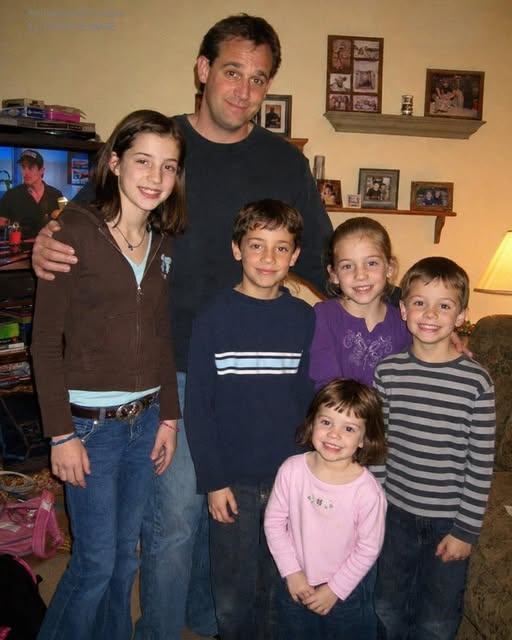
Thomas stood beneath a giant oak tree with all of us gathered around him—smiling, laughing, unaware of the storms he carried alone. The very same oak tree that stood behind the cemetery now.
“I planted that tree the week you all came home with me,” the next letter read. “I needed something strong enough to remind me that roots matter. Even when storms come.”
Emily covered her mouth as tears slipped down her cheeks.
Michael lowered his head.
And suddenly memories returned differently.
Thomas sitting beside hospital beds all night.
Thomas teaching Daniel how to shave before school dances.
Thomas fixing broken bicycles in the garage after twelve-hour work shifts.
Thomas quietly leaving birthday money under pillows when finances were tight.
Thomas standing in the audience at every recital, every game, every graduation.
Always present.
Always tired.
Always trying.
And somehow, none of us fully saw him.
Not really.
Susan finally spoke again, though this time her voice trembled.
“Why didn’t he just tell us?”
The lawyer sighed gently.
“Because he believed children deserved stability more than explanations.”
That sentence shattered something inside the room.
All those years we mistook silence for emotional distance.
All those years we confused restraint with lack of love.
All those years we thought Thomas simply didn’t know how to express affection.
But the truth was much sadder.
Thomas loved so deeply that he feared his grief would become ours too.
So he buried it.
Alone.
For decades.
The rain outside slowed by the time we left the office.
None of us spoke much during the drive to the cemetery.
The clouds had begun to part, revealing streaks of pale evening light across the sky. Wind moved softly through the grass as we walked toward his grave beneath the old oak tree.
The tree stood enormous now.
Its branches stretched wide like protective arms over the earth below.
Susan stopped first.
For a long moment she simply stared at the headstone.
Then, unexpectedly, she began to cry.
Not the quiet kind.
Not polite tears.
Years of anger collapsed out of her all at once.
“I hated him,” she whispered brokenly. “I thought he never wanted us.”
Daniel placed a hand gently on her shoulder.
“But he chose us,” he said.
Those words hung in the air.
Because they were true.
Thomas had chosen us every single day.
Not because he had to.
Because he loved us.
Even when exhausted.
Even when misunderstood.
Even when nobody thanked him.
Grace knelt beside the grave holding a small lantern she had insisted on bringing from home.
“I want him to have light,” she said softly.
The innocence of her voice nearly broke us completely.
Together we placed the lantern beside the headstone.
Its warm glow flickered gently beneath the oak tree as evening settled around us.
And somehow, in that quiet moment, the lantern became more than a symbol of mourning.
It became a symbol of Thomas himself.
A quiet light.
Steady.
Protective.
Never asking for attention.
Only trying to guide others safely through darkness.
Susan wiped her tears slowly.
“I wasted so many years being angry.”
Emily shook her head gently.
“No,” she said. “We were all trying to understand pain we couldn’t see.”
That was the hardest truth of all.
People often carry invisible battles.
The strongest people are not always the loudest.
Sometimes they are simply the ones who continue showing up every day despite heartbreak nobody notices.
As the sun disappeared behind the hills, we stayed together beneath the tree long after darkness arrived. Stories began replacing silence.
Daniel laughed through tears remembering how Thomas burned every Thanksgiving turkey but insisted it tasted perfect.
Michael remembered learning to drive in Thomas’s old truck while Thomas pretended not to panic.
Emily remembered waking from nightmares as a child to find Thomas asleep in a chair beside her bed.
Even Susan smiled faintly while remembering how Thomas secretly attended her art exhibits after she moved away, never telling her because he feared she wouldn’t want him there.
He loved quietly.
That was his language.
And perhaps quiet love is the easiest kind to misunderstand.
Before leaving, we stood together one final time beside the lantern.
The wind rustled softly through the branches above us.
And for the first time in years, the family no longer felt divided by old wounds.
We felt connected.
Not because the past had become perfect.
But because truth had finally given our pain meaning.
Life rarely offers perfect endings.
Sometimes answers arrive too late.
Sometimes apologies remain unspoken.
Sometimes people spend years misunderstanding each other while love exists silently beneath the surface all along.
But family is not built only through blood.
It is built through sacrifice.
Through patience.
Through forgiveness.
Through the decision to stay when leaving would be easier.
Thomas taught us that love is not always loud.
Sometimes love looks like exhaustion.
Like responsibility.
Like quiet sacrifices nobody notices.
Like showing up again and again without expecting praise.
And perhaps the greatest tragedy in life is not losing people after death.
It is failing to see their love while they are still alive.
That night, before we finally walked away from the grave, Susan turned back once more toward the glowing lantern beneath the oak tree.
“I understand now,” she whispered.
The wind carried her words softly into the darkness.
And somehow, beneath those ancient branches, it felt like Thomas finally heard them too.
Moral Lessons From the Story
- People hide pain more deeply than we realize.
Many strong people suffer silently while protecting others. - Love is not always expressed through words.
Sometimes love appears through sacrifice, responsibility, and presence. - Do not judge too quickly.
What looks like distance or coldness may actually be someone struggling quietly. - Appreciate people while they are alive.
Waiting until loss comes often brings regret that cannot be undone. - Family is built through choice and care.
Real family is created through loyalty, patience, and unconditional support. - Forgiveness brings healing.
Understanding someone’s struggles can transform anger into compassion. - Everyone carries invisible battles.
Kindness matters because we rarely know what others are enduring privately. - Small acts of love matter most.
The everyday moments—showing up, helping, listening—become the memories that last forever. - Strength is often quiet.
True strength is continuing to care for others even during personal pain. - Love leaves light behind.
Even after someone is gone, the goodness they gave continues living inside the people they cared for.