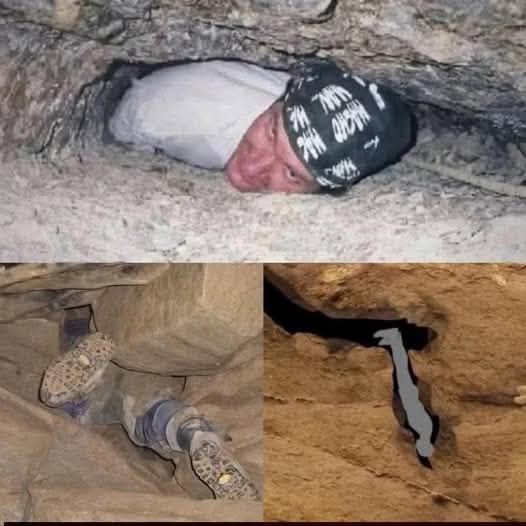
You don’t need to be there to feel it. Just one look at the scene is enough to trigger something instinctive—your chest tightens, your breath shortens, and your mind immediately searches for an escape route that doesn’t exist. A person is wedged deep inside a narrow crack in the earth, pressed so tightly between rough stone that even turning their head looks like a struggle. There is no space, no room to shift comfortably, no clear way out. And yet, this moment didn’t begin with panic—it began with curiosity. Because that’s how stories like this always start. Not with danger, but with exploration. There’s something deeply human about wanting to see what’s hidden. Caves, tunnels, underground passages—they carry a quiet mystery, promising discovery and the thrill of stepping into something unknown. The entrance doesn’t look like a trap at first. It looks manageable. So you go in—slowly, carefully—until the space tightens, the rock presses closer, and suddenly you realize you can’t move the way you thought you could.
That’s the moment everything changes. The body is pinned, shoulders compressed, legs stretched out with no leverage, and even breathing becomes restricted. It’s not just about oxygen—it’s about pressure. The chest can’t fully expand, and the mind reacts instantly. Panic begins—not as a choice, but as a reflex. Heart rate rises, thoughts race, and the instinct is to fight, to force your way out. But rock doesn’t move, and struggling only makes things worse. In spaces like this, the greatest threat isn’t the stone—it’s the mind. Claustrophobia intensifies every sensation, making the space feel smaller, the air heavier, time slower. That’s why control matters more than strength. Experienced explorers know that survival depends on small, precise movements, steady breathing, and knowing when to stop. Stillness, though counterintuitive, can create the space needed to think and adjust.
Preparation and awareness are what separate risk from disaster. Caves are unpredictable—openings narrow, surfaces shift, and visibility deceives. Without proper planning, the margin for error disappears. This moment reflects something deeper than physical danger. It’s about the human drive to explore—the same curiosity that leads to discovery, but also to risk when caution is ignored. If the person escaped, it wasn’t through force, but patience—inch by inch, breath by breath, carefully reducing pressure and finding space where none seemed to exist. Moments like this leave behind more than relief—they leave understanding. Nature doesn’t adapt to us; it demands respect. And sometimes, the way out isn’t about pushing harder, but slowing down, staying calm, and thinking clearly even when it feels like the walls are closing in.