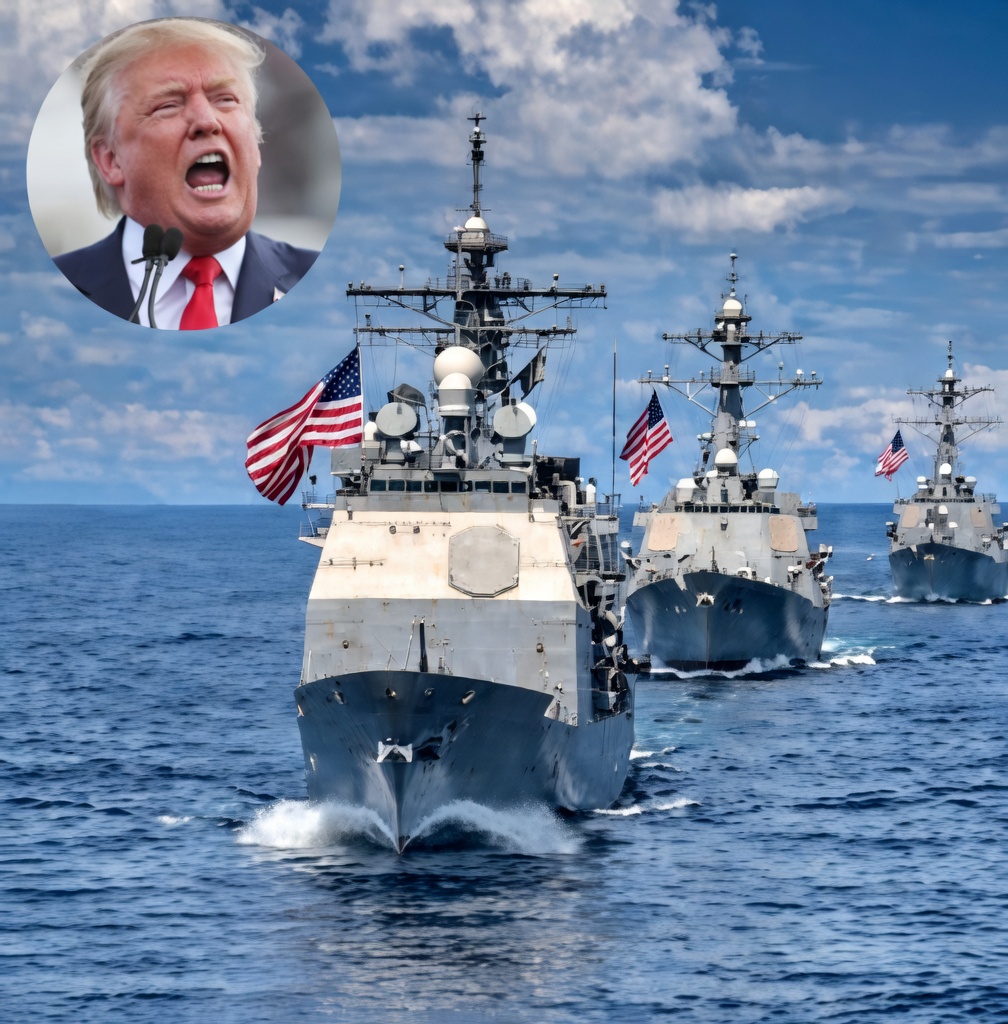
Amid intensifying geopolitical tensions in the Middle East, Iran has issued a strong warning that it may move to “completely close” the Strait of Hormuz if the United States proceeds with threats to strike the country’s energy infrastructure. The statement follows remarks from Donald Trump, who said Iranian power facilities could be “obliterated” within 48 hours if the critical waterway—through which a significant portion of the world’s oil supply flows—is not kept open.
The Strait of Hormuz remains one of the most strategically important chokepoints in the global energy network. Any disruption to traffic in this narrow passage could trigger major spikes in oil prices and send shockwaves through international markets. Analysts warn that even the threat of closure is enough to create uncertainty, with governments and investors closely monitoring every development.
On the ground in Iran, anxiety among civilians is rising. Residents in major cities, including Tehran, are expressing concern about the possibility of power outages and further escalation. One woman speaking to BBC Persian said she fears the consequences of losing electricity, describing it as a scenario that could severely disrupt daily life, healthcare, and essential services across the country.
Meanwhile, the military situation continues to escalate. Israel launched a series of overnight airstrikes targeting locations in the Iranian capital, marking one of the most significant direct confrontations between the two sides in recent years. In response, Iran fired multiple missiles toward southern Israel, intensifying fears of a broader regional conflict.
Emergency services in southern Israel reported that more than 160 people were injured in the missile attacks. Several residential areas were hit, and infrastructure damage has been described as severe in some locations. Initial assessments suggest that the intended target may have been a sensitive facility near the town of Dimona, which lies close to a well-known nuclear site, raising additional concerns about the potential risks of further escalation.
The impact of the conflict is no longer limited to the two countries directly involved. Regional powers including Saudi Arabia and the United Arab Emirates have confirmed that they intercepted incoming missile threats, indicating that the situation is expanding beyond its original scope. This has increased fears among international observers that the conflict could draw in more nations and destabilize a wider area.
For civilians living near the impact zones, the experience has been deeply traumatic. Amadiel Ben Yehuda, a resident of Dimona, described the terrifying moment an Iranian missile struck just minutes from his home. As he rushed toward a bomb shelter, he said the force of the explosion was so powerful that shockwaves could be felt even underground, creating a sudden and overwhelming sense of danger.
After emerging from the shelter, he witnessed widespread destruction throughout his neighborhood. Many homes suffered major structural damage, with ceilings collapsing and windows shattered. Entire apartment buildings were rendered uninhabitable, forcing families to flee. Among the damaged structures was a local kindergarten, a sight that residents say made the devastation even more difficult to process.
Local authorities are continuing rescue and recovery operations, while medical teams work to treat the injured. The psychological impact is also becoming increasingly apparent, as residents struggle to come to terms with the scale of destruction and the uncertainty of what may come next.
As tensions remain high, global leaders are calling for restraint, but the situation on the ground continues to evolve rapidly. With threats, retaliations, and civilian fears all mounting at once, the coming days are likely to be critical in determining whether the conflict can be contained—or whether it will escalate into a much wider regional crisis.