
More than 16 million Americans live with a disease caused by smoking.
- Cigarette smoking is the leading preventable cause of disease, death, and disability in the United States.1
- Cigarette smoking and secondhand smoke exposure cause more than 480,000 deaths each year in the United States. This is nearly one in five deaths.123
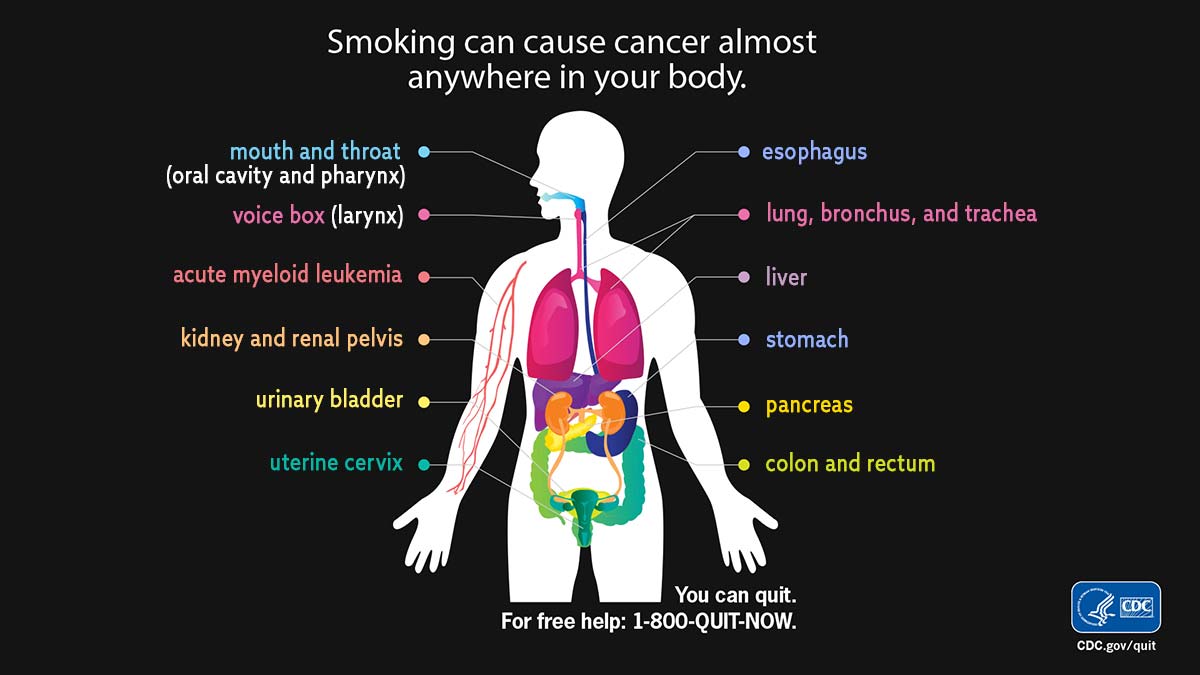
Cigarette smoking harms nearly every organ of the body.
Cigarette smoking causes many diseases and reduces the health of people who smoke.12 Smoking also increases health care utilization, health care costs, and absenteeism from work.1
Cigarette smoking causes:1
- Cancer
- Heart disease and stroke
- Lung diseases such as chronic obstructive pulmonary disease (COPD)
- Type 2 Diabetes
- Harmful reproductive health effects
- Other diseases, including certain eye diseases and problems of the immune system, including rheumatoid arthritis.
Secondhand smoke is harmful.
- Secondhand smoke exposure contributes to over 40,000 deaths among nonsmoking adults and 400 deaths in infants each year.1
- In adults, secondhand smoke can cause coronary heart disease, stroke, and lung cancer.1
- Children exposed to secondhand smoke are at increased risk for respiratory infections, ear infections, asthma attacks, and sudden infant death syndrome.1
Quitting smoking benefits health
- Quitting smoking is one of the most important actions people can take to improve their health.
- Quitting smoking improves health and reduces the risk of premature death. Quitting also reduces the risk for smoking-related diseases, including heart disease, cancer, and COPD.
- Treatments—including counseling and medication—can help people quit smoking. Free resources are available to help people quit.